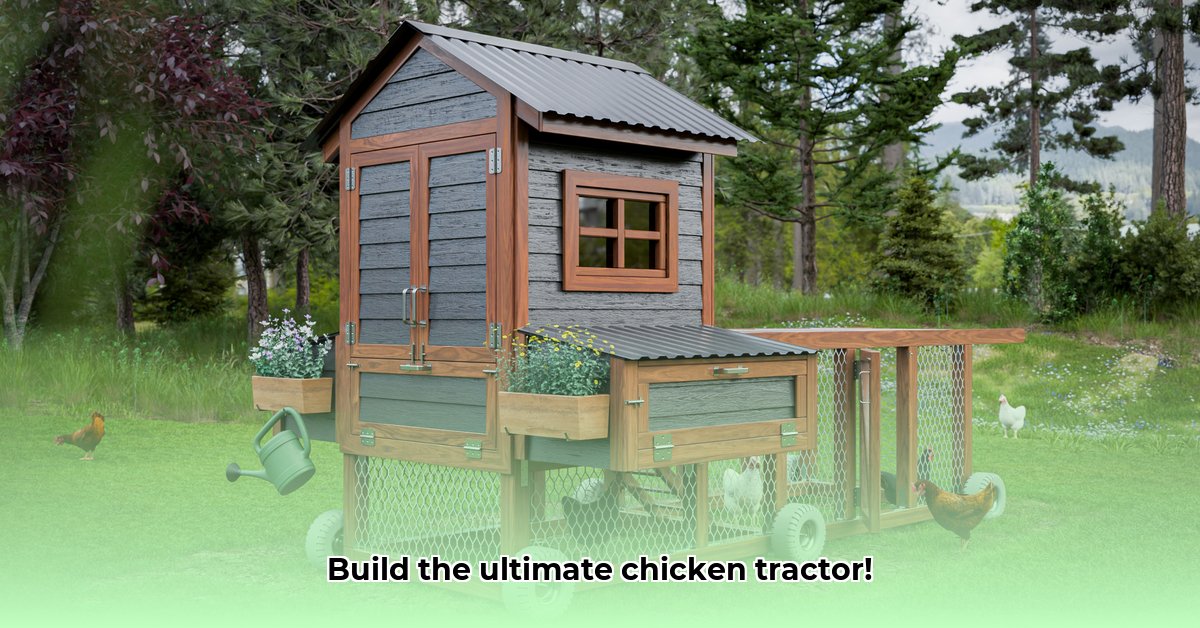
Building a chicken tractor is a rewarding project that offers fresh eggs, happy hens, and improved pasture management. This step-by-step guide helps you build your own mobile chicken coop, from planning to completion. See more chicken tractor designs for inspiration.
Planning Your Chicken Tractor
Before you begin, careful planning is essential. The size of your tractor directly correlates to your flock size. A general rule of thumb is to provide 2-3 square feet of interior space per chicken. But did you know that neglecting predator considerations can significantly impact your success rate? A poorly designed coop is an open invitation for predators.
Consider your local climate and potential predators. Coyotes, foxes, and raccoons are common threats, requiring robust predator-proofing measures. Harsh weather conditions may necessitate additional insulation or weatherproofing. Choosing durable, yet affordable materials is also crucial. Pressure-treated lumber for the frame provides rot resistance, while ½-inch or finer hardware cloth is vital for predator protection.
Gathering Your Supplies
Before construction, gather all necessary materials:
- Lumber: Pressure-treated lumber (for durability and rot resistance).
- Hardware Cloth: ½-inch mesh or finer (for secure predator protection).
- Roofing Material: Plywood, corrugated metal, or other suitable material.
- Hinges and Latches: Sturdy hinges and a secure latch for easy access and security.
- Wheels (Optional): Heavy-duty casters for mobility (highly recommended).
- Roosting Bars: Simple 2x4s or similar material.
- Nesting Boxes: Wooden boxes suitable for egg-laying.
- Screws, Nails, and other Fasteners: Choose materials appropriate for outdoor use and durability.
Step-by-Step Construction Guide
Now, let's build! Follow these detailed steps for a successful chicken tractor:
Constructing the Frame: Build a sturdy rectangular frame using your pressure-treated lumber. Ensure accurate measurements based on your planned dimensions. The strength of your frame is crucial for overall coop stability and longevity.
Adding Walls and Roof: Attach the hardware cloth securely to the frame, creating the walls. Leave no gaps! Then, build and attach the roof using your chosen roofing material for weather protection. Remember, a secure roof is another important line of defense against predators. Consider adding an overhang to further protect from rain and sun.
Predator-Proofing: This critical step involves meticulously checking the hardware cloth for gaps. Bury the bottom edge several inches underground to prevent digging predators. Reinforce weak points with additional wire mesh where necessary. Did you know that a properly installed hardware cloth can reduce predator attacks by up to 90%?
Installing Wheels (Optional) and Ramp: Securely attach heavy-duty casters if you opted for a mobile design. A ramp provides easier access. Consider the terrain; heavier-duty wheels may be necessary for uneven ground.
Adding Comfort Amenities: Install roosting bars and nesting boxes inside. Optimal placement ensures chicken comfort and convenient egg collection. Consider adding bedding to the nesting boxes for extra comfort.
Finishing Touches: Attach hinges and a latch to the door. Consider painting the exterior with non-toxic, poultry-safe paint for weather protection and aesthetics.
Pasture Management and Rotation
The key to successful chicken tractor use is regular relocation. Move the tractor daily or every few days to allow for fresh grazing and prevent overgrazing. This system also provides natural fertilization for the soil. A well-managed rotation system enhances pasture health and reduces pest problems.
Potential Problems and Solutions
While building a chicken tractor is generally straightforward, be prepared for potential challenges:
| Issue | Likelihood | Severity | Mitigation Strategies |
|---|---|---|---|
| Predator Attacks | High | High | Secure enclosure; regular monitoring; consider electric netting |
| Overgrazing | Moderate | Moderate | Rotational grazing; adjust flock size based on pasture size; closely observe pasture health |
| Disease Outbreak | Low | High | Maintain good biosecurity; regular health checks; seek veterinary advice |
| Structural Failure | Low | Moderate | Regular inspections; timely repairs; use quality materials |
| Mobility Difficulties | Moderate | Low | Smooth terrain ideal; consider assistance for larger tractors |
Remember, regular maintenance and inspections are vital. Addressing any issues promptly will help maintain your chickens' safety and the coop's longevity. Proactive problem-solving is critical for long-term success.
Advanced Design Considerations
For experienced chicken keepers, advanced design options include winterization techniques, integrated composting systems, and customizable features for specific needs. Researching these options can significantly enhance your chicken tractor's functionality and efficiency.
Building a chicken tractor is a journey of sustainable farming practices. Enjoy the process and the fresh eggs!